Launch offer — valid today only

📄 Digital book in PDF · read it on your phone or print it

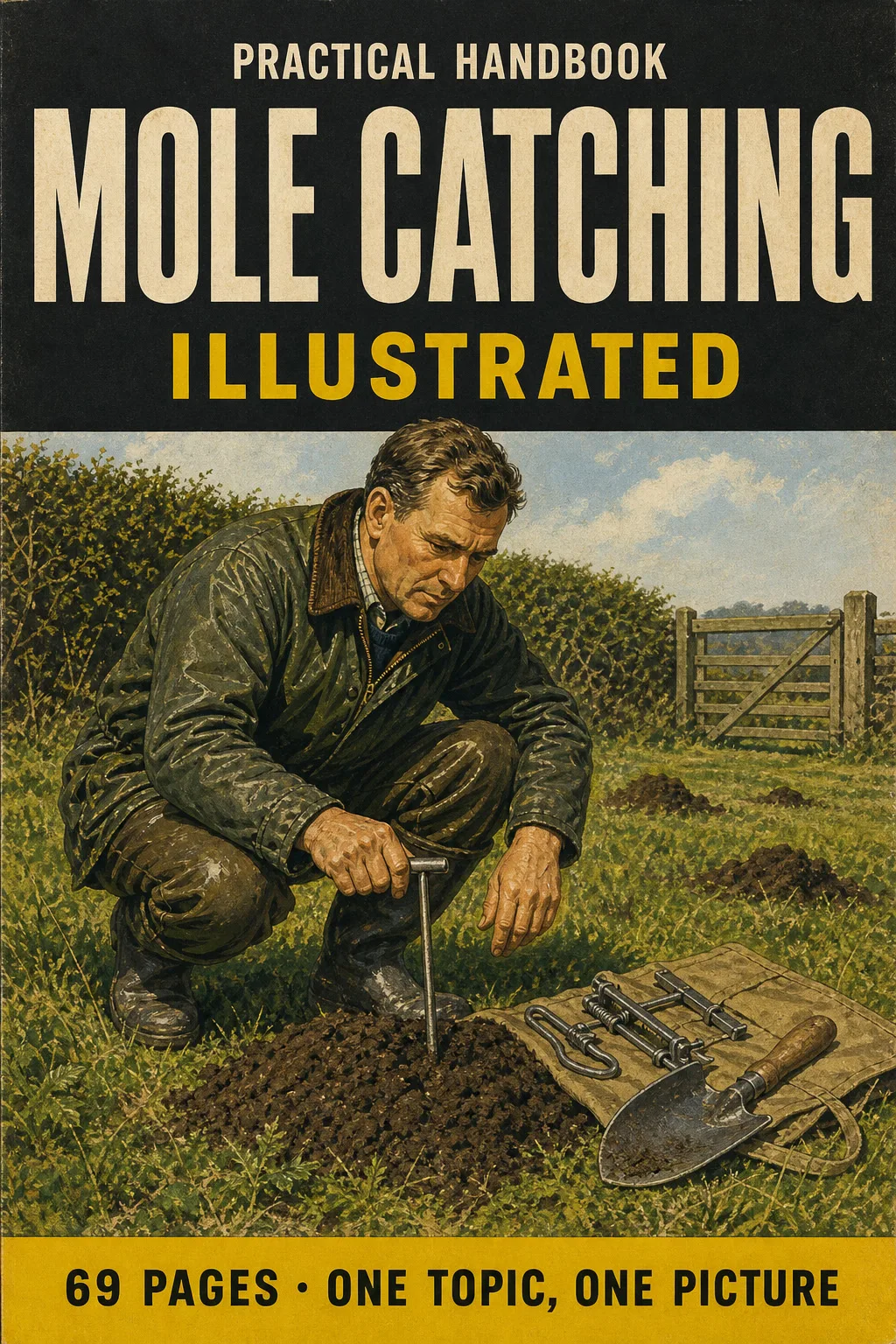
Molehills, Main Runs and Mole Traps in Drawings Every Trap Set in the Same Order

Fresh and old hills, main and feeding runs, the probe, scissor and tunnel traps, the 7-step setting sequence, traps sprung empty, lawns, paddocks and greens, and what UK law covers. Every topic has its own page: the drawing first, then what you need to remember. 69 illustrated pages.

SHOW ME THE 69 PAGES

🔒 Secure checkout · PDF by email · 30-day guarantee

Every topic, its own pageEach run, trap and setting step drawn, with the explanation alongside
69 illustrated pages9 parts, from the European mole at a glance to the field self-test
Up-to-date sourcesPests Act 1954, the Small Ground Vermin Traps Order 1958 and Natural England guidance
PDF by emailFormat

Look Inside the Book

Every page has one large drawing and a box with the steps, signs and measurements you need to know:

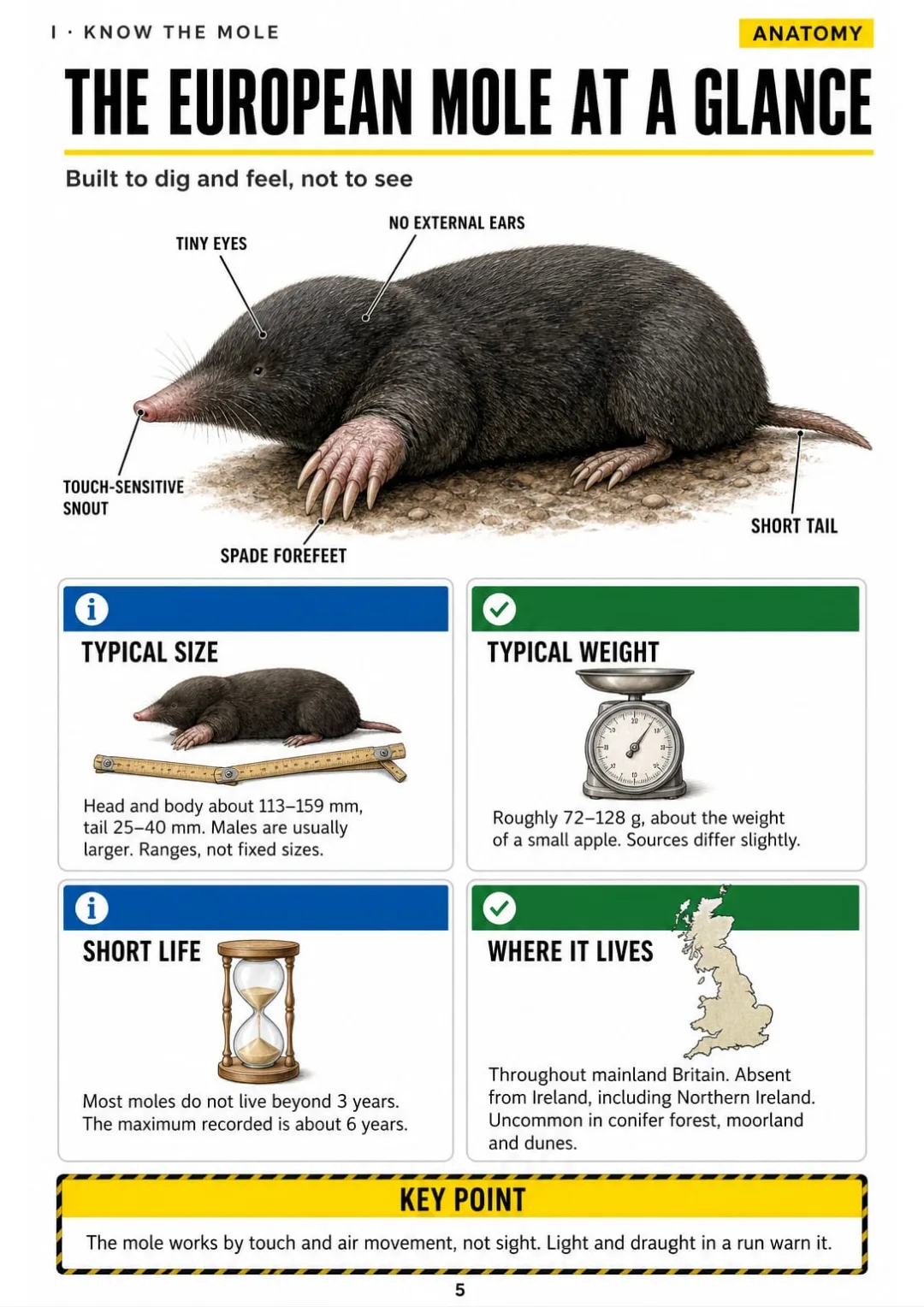
Talpa europaea: 113–159 mm body, 72–128 g, tiny eyes, no external ears
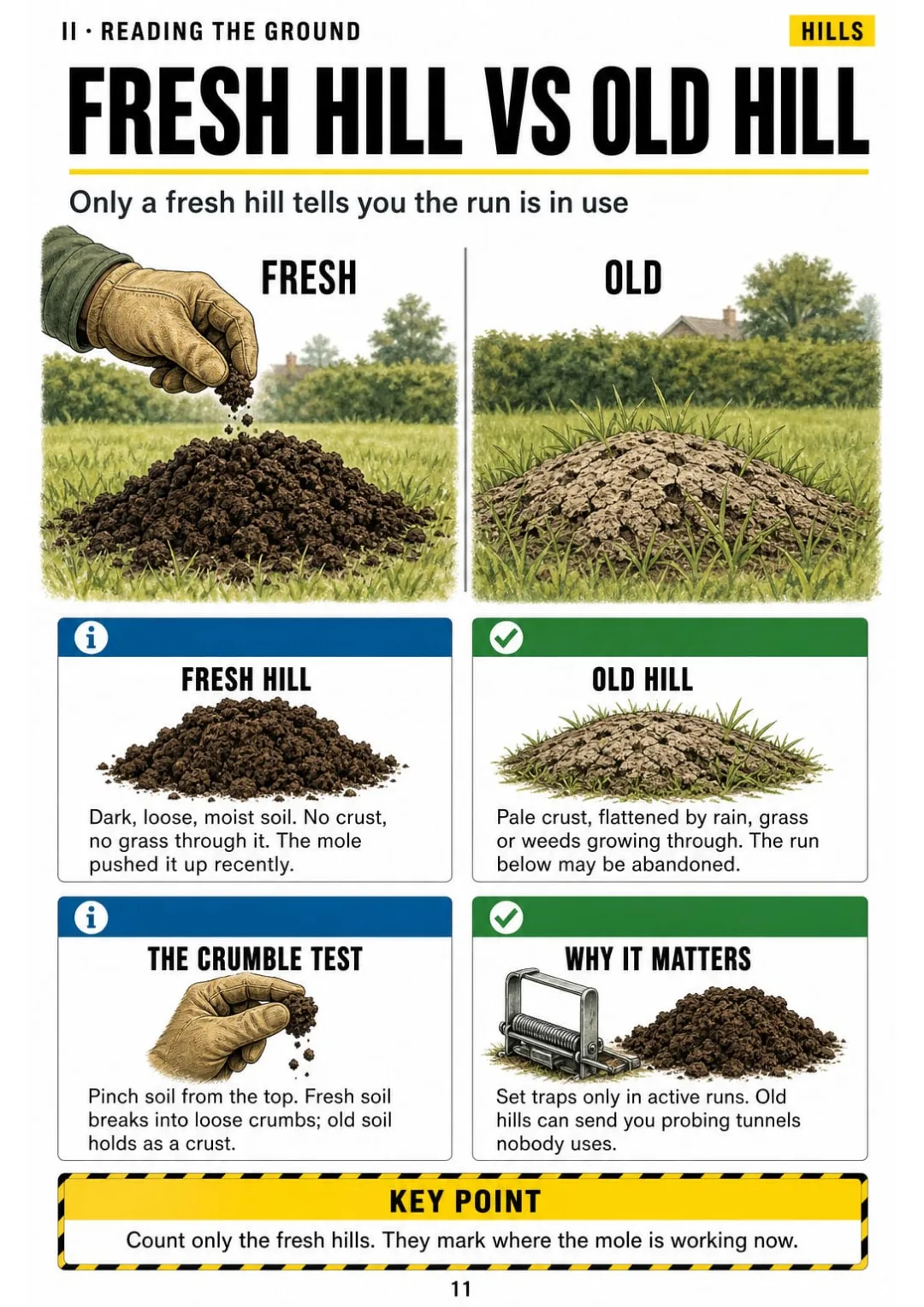
Fresh hill: loose, dark, crumbly. Old hill: crusted and grassed over.
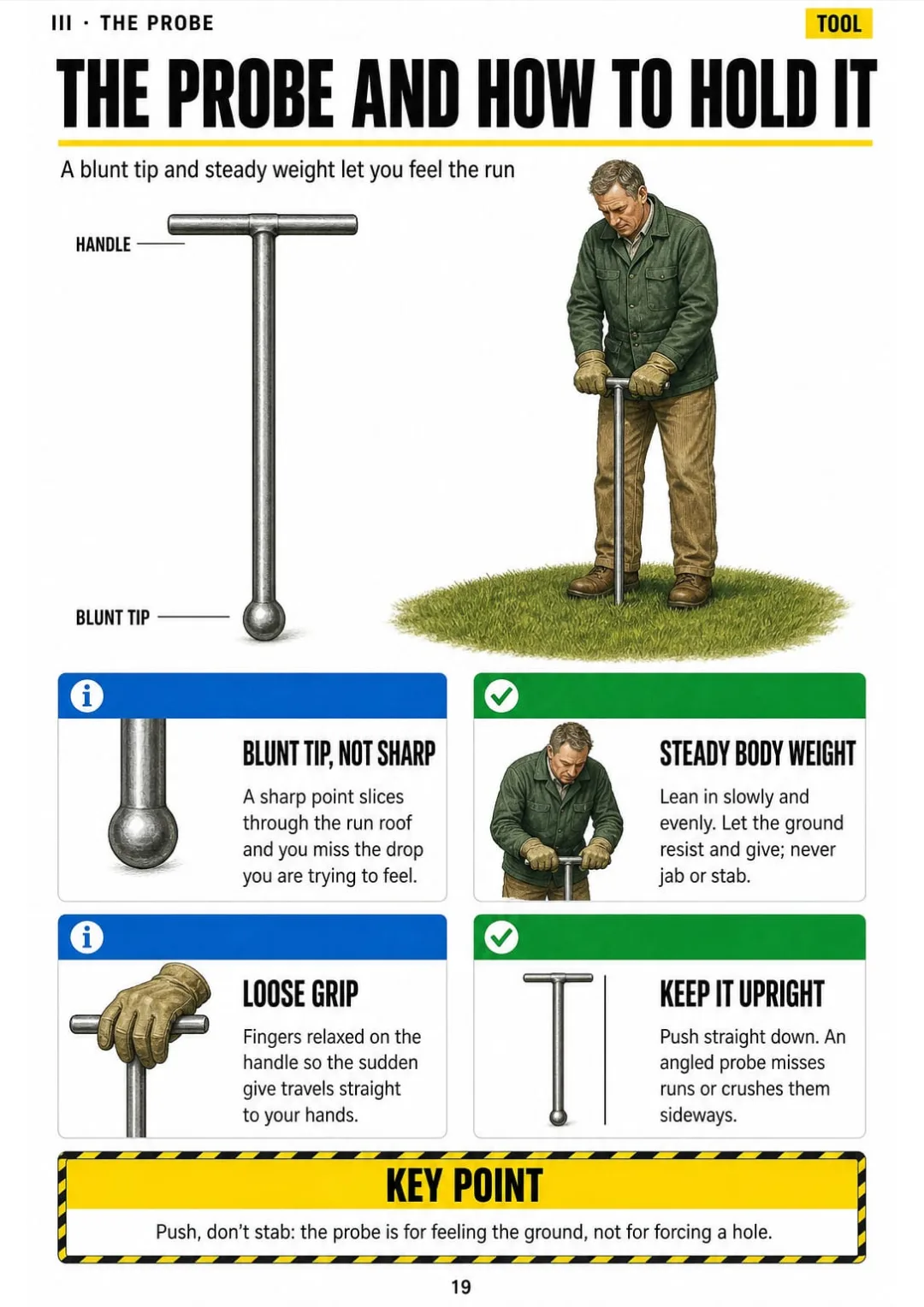
Blunt tip, T handle, straight down with steady weight: the grip that lets you feel the run.
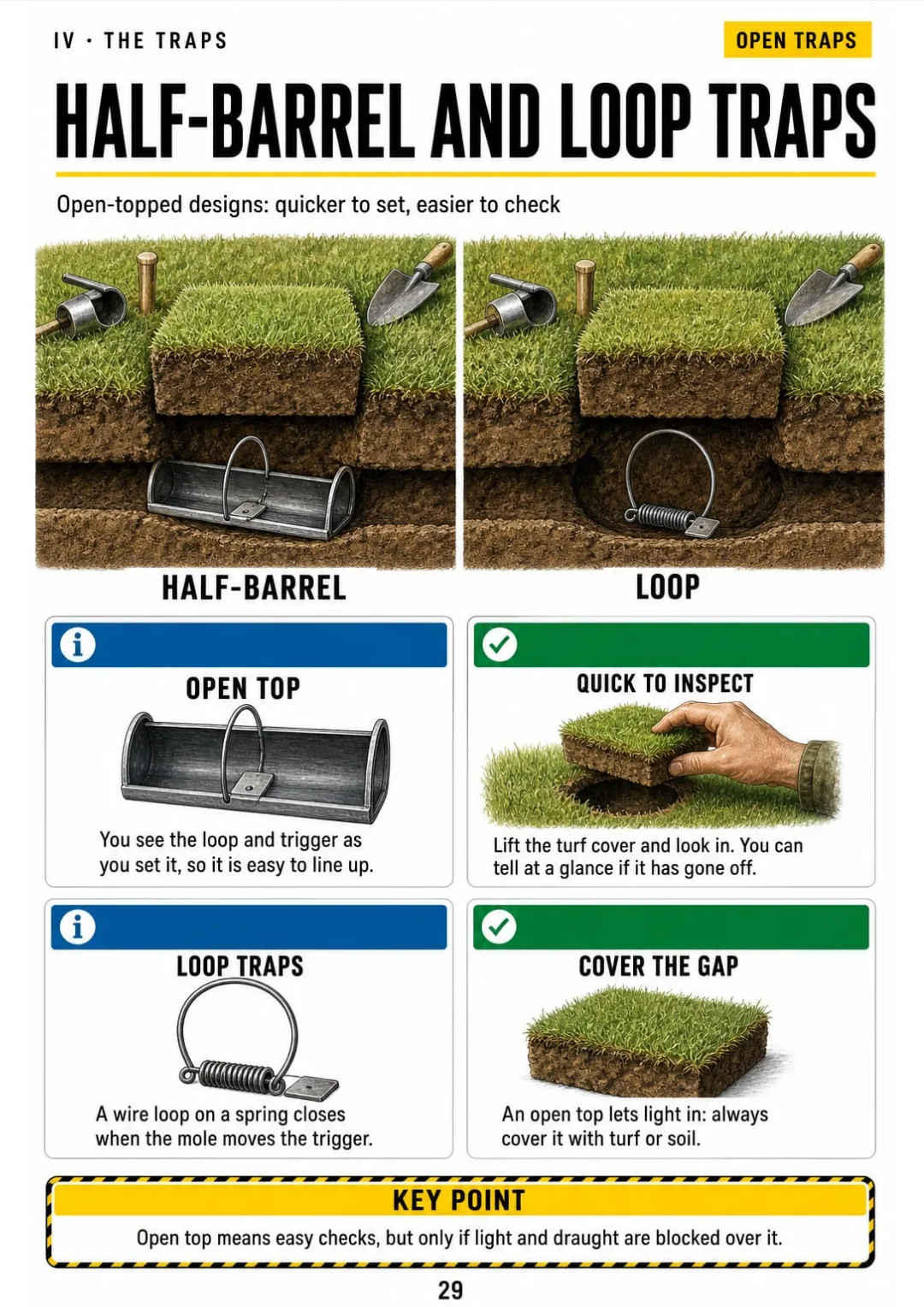
Half-barrel and loop traps: open top, set by eye, covered with turf
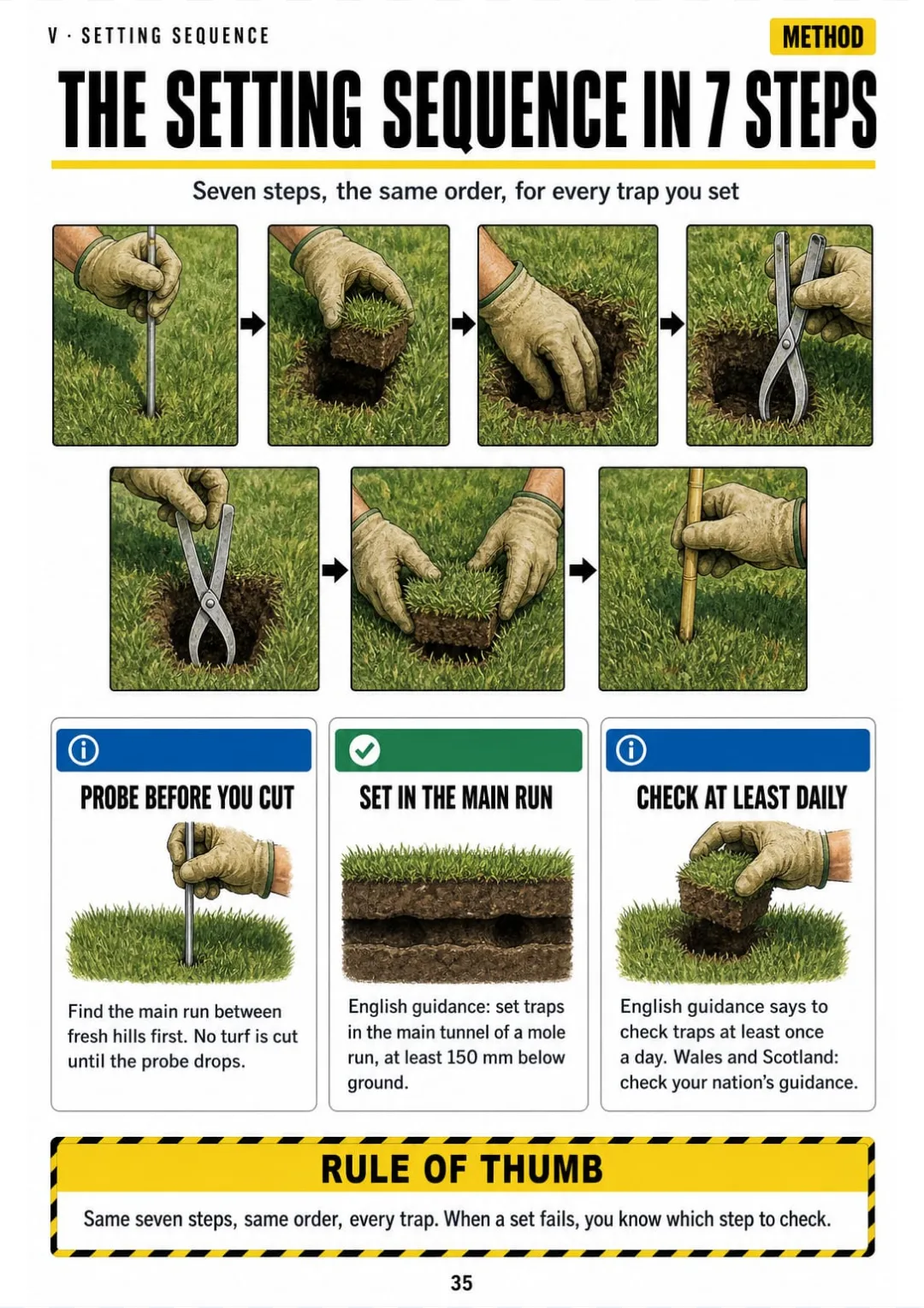
7 steps on one page: probe, open, clean, size, set, cover, mark
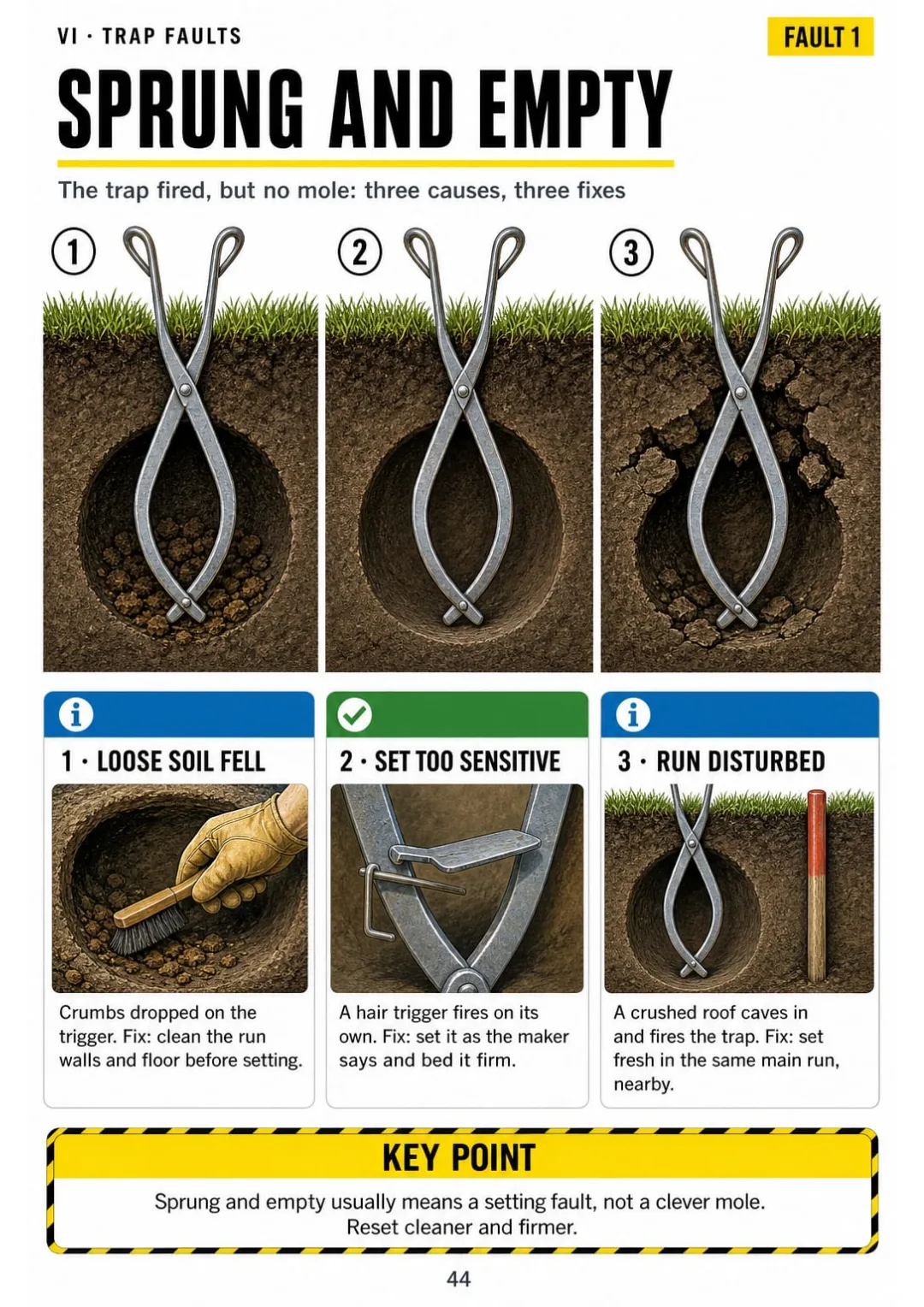
Sprung and empty: loose soil, a hair trigger or a crushed run, and the fix for each
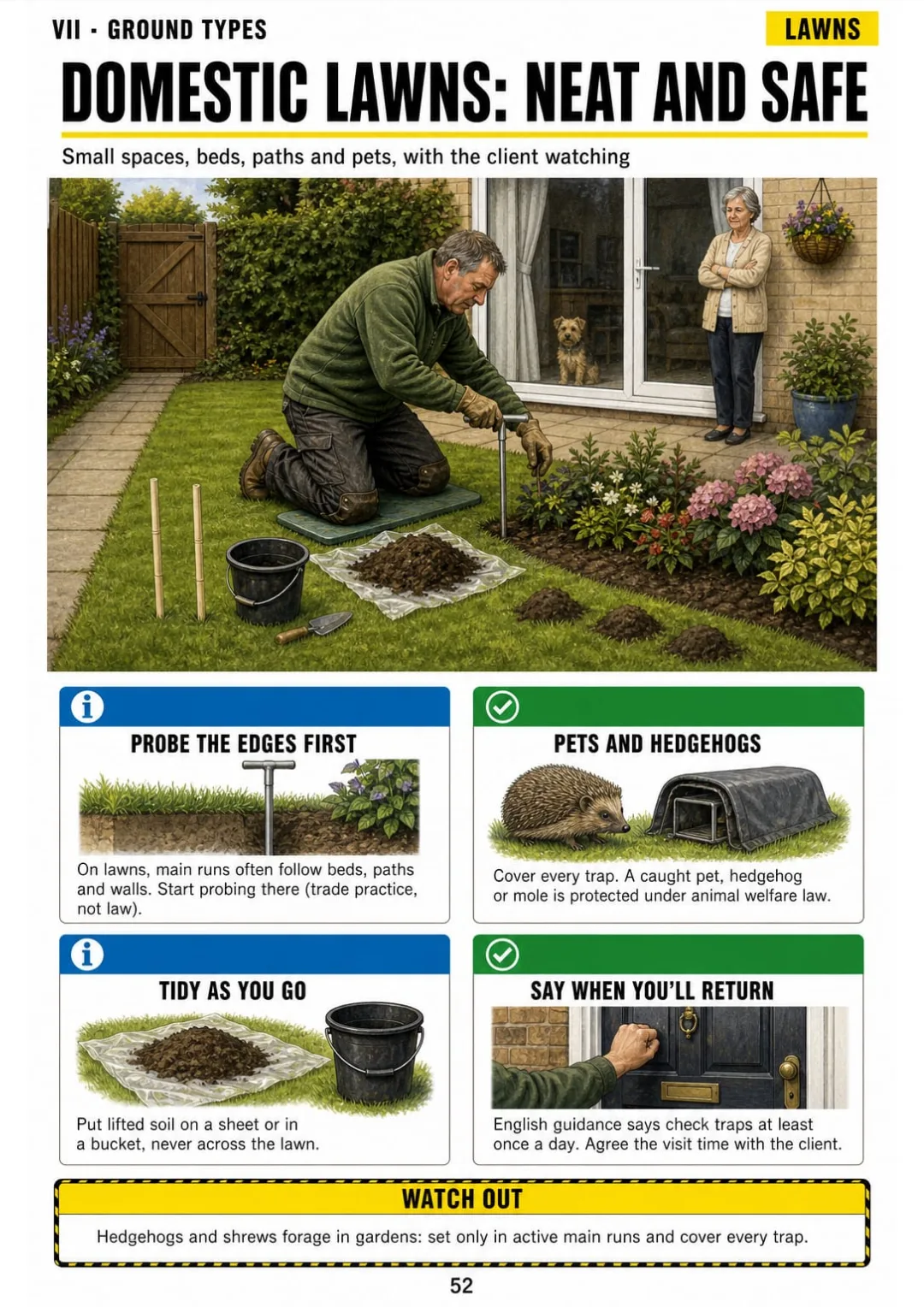
Domestic lawns: runs along beds and paths, covered traps, daily checks
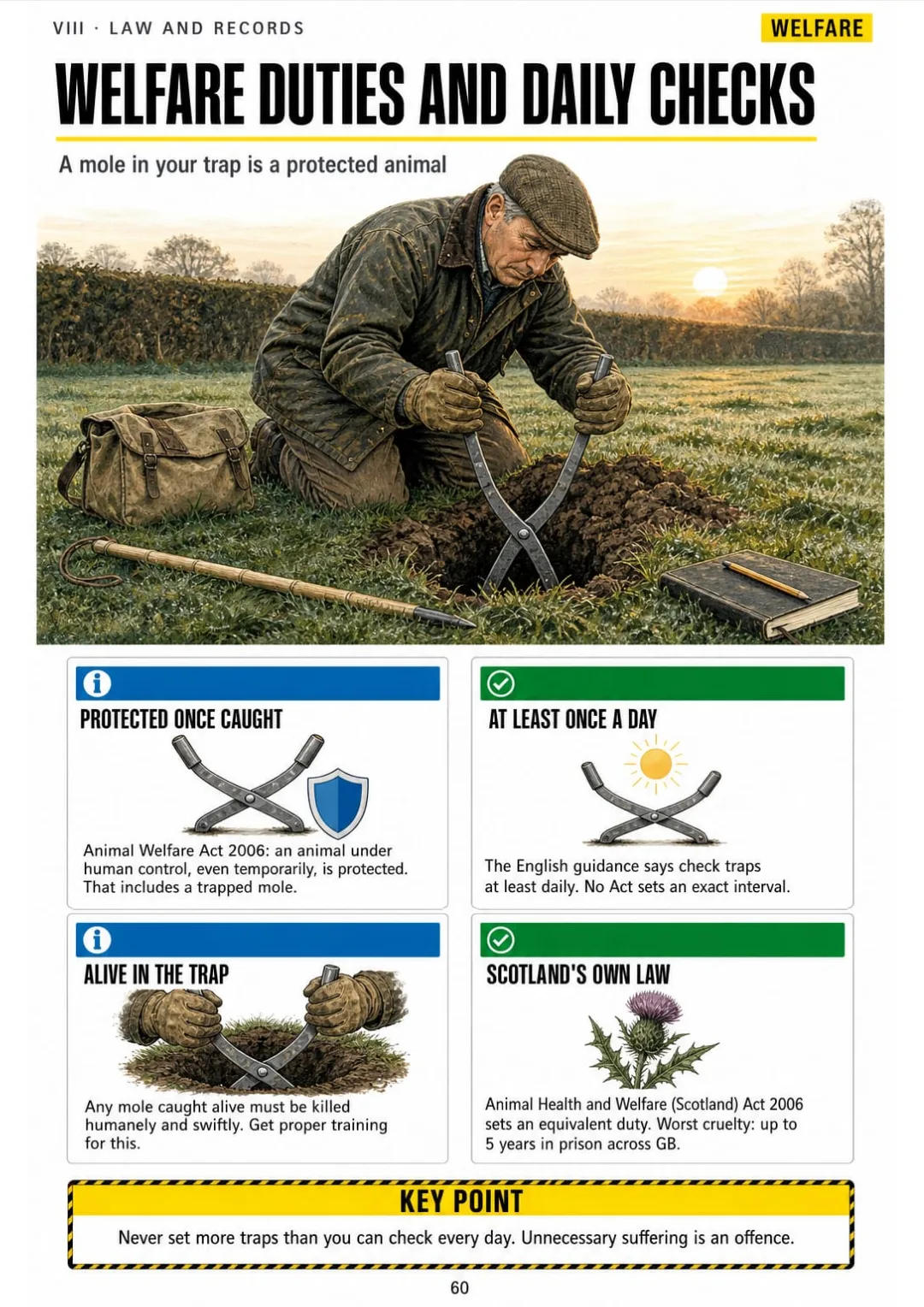
Animal Welfare Act 2006: a trapped mole is protected; guidance says check at least daily

Swipe to see more →

These are real pages from the book. The table of contents is the full one: 9 parts and 65 topics.

The Problem Isn't You. It's How It Was Explained.

You're on a client's lawn with the probe in your hands, between two fresh hills. You push down, it sinks everywhere, and you can't tell whether you've found the run or just soft soil.

The guide you read gave it one paragraph: apply moderate pressure until resistance is lost. Nobody showed you the grip, the angle or what the drop actually feels like.

Blunt tip, T handle, straight down with steady weight: the grip that lets you feel the run.

In Mole Catching Illustrated the probe has its own page: the blunt tip, the T handle, both hands on top, straight down with steady weight, and the soil section underneath showing the moment the tip drops into the run.

The same goes for the rest: fresh hill vs old hill, main runs vs feeding runs, the scissor trap part by part, the 7-step setting sequence and the trap sprung empty. Each one on its own page.

Next time you probe, you feel the drop, you know it's the run and you set the trap without reaching for your phone.

COMPARE FOR YOURSELF

The Same Topic, Two Ways to Learn It

THIS
  • The manual: line after line
  • Molehills and runs explained only in words
  • You reach the lawn still unsure
The assessment of mole activity is predicated upon the accurate differentiation of recently excavated spoil from that of earlier workings. Recently deposited material is typically characterised by a loose, friable consistency and a darker colouration attributable to its residual moisture content, whereas older deposits, having been subjected to repeated precipitation and desiccation, tend to develop a surface crust and may become partially or wholly colonised by grass. The operator should accordingly prioritise locations exhibiting the former characteristics when selecting sites for subsequent probing.
FOR THIS
  • The fresh hill and the old hill side by side in one drawing
  • The signs to check in a box
  • You see it and you get it
Fresh hill: loose, dark, crumbly. Old hill: crusted and grassed over.
CONTENTS

Take a Look at the 9 Parts and 65 Topics

Know the mole, reading the ground, finding the run with the probe, the traps, the setting sequence, why traps fail, work by ground type, law and records, and a field review: 69 pages, all illustrated.

IKnow the Mole · pp. 5-10
  1. The European mole at a glance
  2. What it eats and why it keeps digging
  3. The daily rhythm: active, rest, active
  4. One mole, one territory
  5. The mole's year in one page
  6. Moles, voles and rabbits: tell the signs apart
IIReading the Ground · pp. 11-18
  1. Fresh hill vs old hill
  2. The soil section: what lies under a lawn
  3. Main runs: the mole's roads
  4. Feeding runs: dead ends that fool you
  5. Surface runs: the raised ridges
  6. Reading a line of hills
  7. Fortresses and large mounds
  8. Walk the site before you touch a tool
IIIFinding the Run with the Probe · pp. 19-26
  1. The probe and how to hold it
  2. The drop: what a run feels like
  3. Where to start: away from the hill
  4. Probing between two fresh hills
  5. Following the run with three probes
  6. Choosing the best stretch of run
  7. Probing in hard, stony or wet ground
  8. Marking your spots
IVThe Traps · pp. 27-34
  1. Scissor (pincer) trap: parts labelled
  2. Tunnel (barrel) trap: parts labelled
  3. Half-barrel and loop traps
  4. Claw and spring-jaw traps
  5. Which trap for which run
  6. Tools in the kit bag
  7. Trap care: clean, oiled, no smell
  8. Handling traps safely
VThe Setting Sequence · pp. 35-43
  1. The setting sequence in 7 steps
  2. Step 1-2: open the run cleanly
  3. Step 3: clean the run without crushing it
  4. Step 4: check the run's size and depth
  5. Step 5: set the trap in the run
  6. Step 6: block the light and draught
  7. Step 7: mark, note and leave
  8. Worked example: a front lawn with five hills
  9. How many traps and where
VIWhy Traps Fail and How to Fix Them · pp. 44-51
  1. Sprung and empty
  2. Buried with soil: the mole pushed it in
  3. Untouched for days
  4. The mole dug round the trap
  5. The trap went off but missed
  6. Scent and handling mistakes
  7. Weather that stops the catch
  8. The fault-finding chart
VIIWork by Ground Type · pp. 52-58
  1. Domestic lawns
  2. Paddocks and pasture
  3. Golf greens, tees and fairways
  4. Bowling greens and sports pitches
  5. Gardens near woodland and hedges
  6. Ground repair after the catch
  7. Prevention: what helps and what doesn't
VIIILaw, Welfare and Records · pp. 59-64
  1. What the law covers for mole traps
  2. Welfare duties and checking intervals
  3. Restricted methods: know the line
  4. Non-target animals and safety
  5. Landowner permission and the client handover
  6. The trap record
IXField Review · pp. 65-69
  1. The site walk checklist
  2. The setting sequence on one card
  3. The most common mistakes
  4. Self-test: read these three sites
  5. Answers and what to remember

One Page, One Topic, All Clear

Think of it this way:

A club rings you: six fresh hills on a green and a competition on Saturday. You need to find the main run first time, with the head greenkeeper watching.

You open the page on main runs and feeding runs: the soil section shows the road the mole uses every day and the dead ends that fool you, with the trap spot marked.

7 steps on one page: probe, open, clean, size, set, cover, mark

The same with the probe, the scissor trap, the 7-step setting sequence, the trap sprung empty and what the law covers: each one on its own page.

Mole Catching Illustrated is 9 parts and 65 topics, all drawn, and at the end a site walk checklist, the most common mistakes and a self-test on three sites with answers.

What you see drawn, you don't have to memorize.

What's Inside Mole Catching Illustrated:

Ipp. 5-10

Know the Mole

The European mole at a glance, what it eats, its daily rhythm, one mole per territory, its year on one page and how to tell its signs from voles and rabbits.

IIpp. 11-18

Reading the Ground

Fresh hill vs old hill, the soil section under a lawn, main, feeding and surface runs, reading a line of hills, fortresses and the site walk.

IIIpp. 19-26

Finding the Run with the Probe

The probe and the grip, what the drop feels like, where to start, probing between two hills, following the run and probing hard, stony or wet ground.

IVpp. 27-34

The Traps

Scissor, tunnel, half-barrel, loop and claw traps with their parts labelled, which trap for which run, the kit bag, trap care and safe handling.

Vpp. 35-43

The Setting Sequence

The setting sequence in 7 steps, one page per step, a worked front lawn with five hills and how many traps to set and where.

VIpp. 44-51

Why Traps Fail and How to Fix Them

Every way a trap fails, with its cause and fix: sprung and empty, buried with soil, untouched for days, dug round, went off but missed, scent mistakes and weather, plus a fault-finding chart so you know what to change before you reset.

VIIpp. 52-58

Work by Ground Type

Domestic lawns, paddocks and pasture, golf greens and fairways, bowling greens and pitches, gardens near woodland, ground repair and prevention.

VIIIpp. 59-64

Law, Welfare and Records

What the law covers for mole traps, welfare duties and checking, restricted methods, non-target animals, landowner permission and the trap record.

IXpp. 65-69

Field Review

The site walk checklist, the setting sequence on one card, the most common mistakes and a self-test on three sites with answers.

At the end of the book: A site walk checklist, the setting sequence on one card, a fault-finding chart and a self-test on three sites with answers.
Plus: 2 Free Books

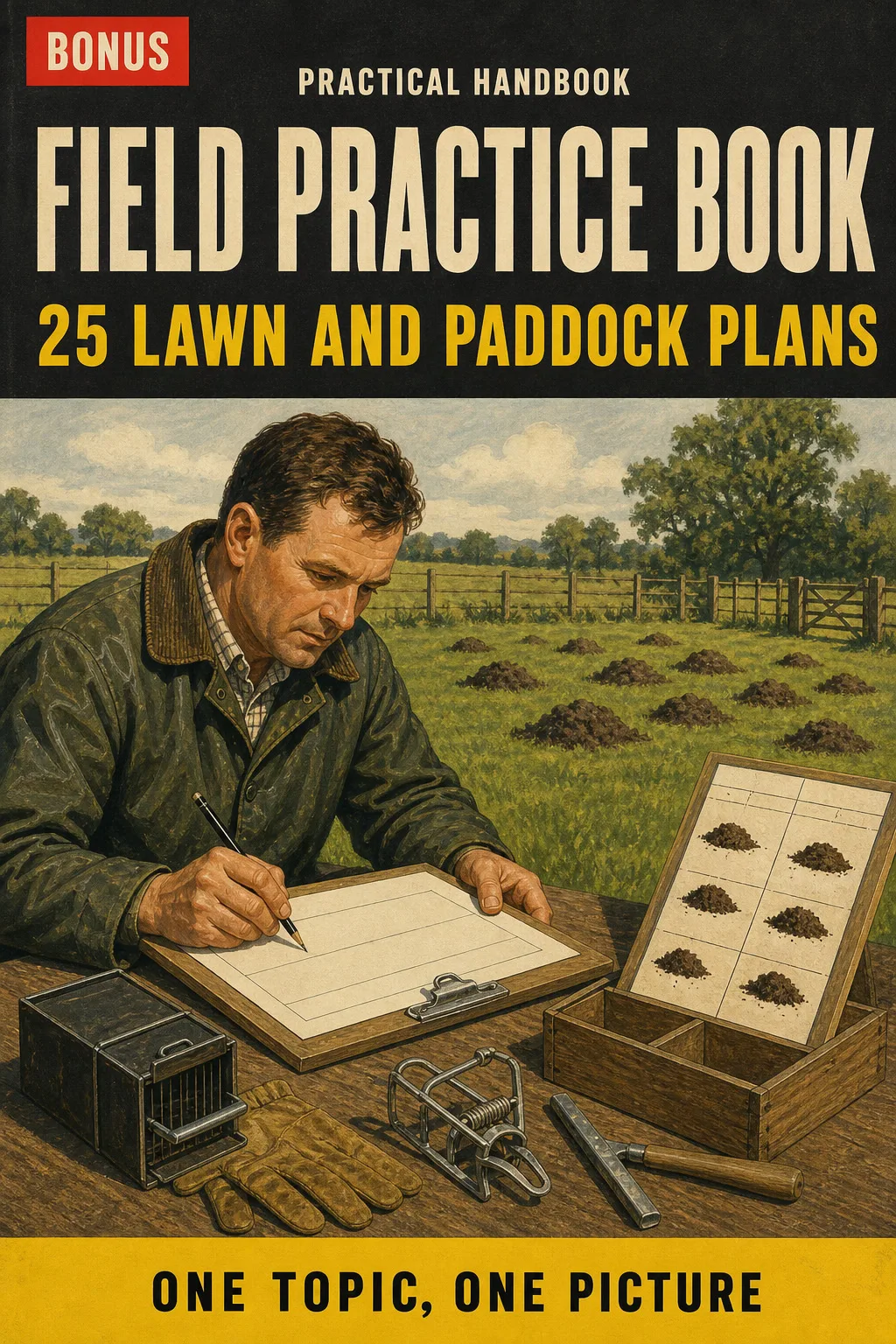
Field Practice Book: 25 Lawn and Paddock Plans

BONUS 1: «Field Practice Book: 25 Lawn and Paddock Plans»

Value on its own: US$ 17.90

Drawn plans of real-looking sites where you mark the fresh hills, trace the main run and pick the trap spot, with the answer drawn overleaf.

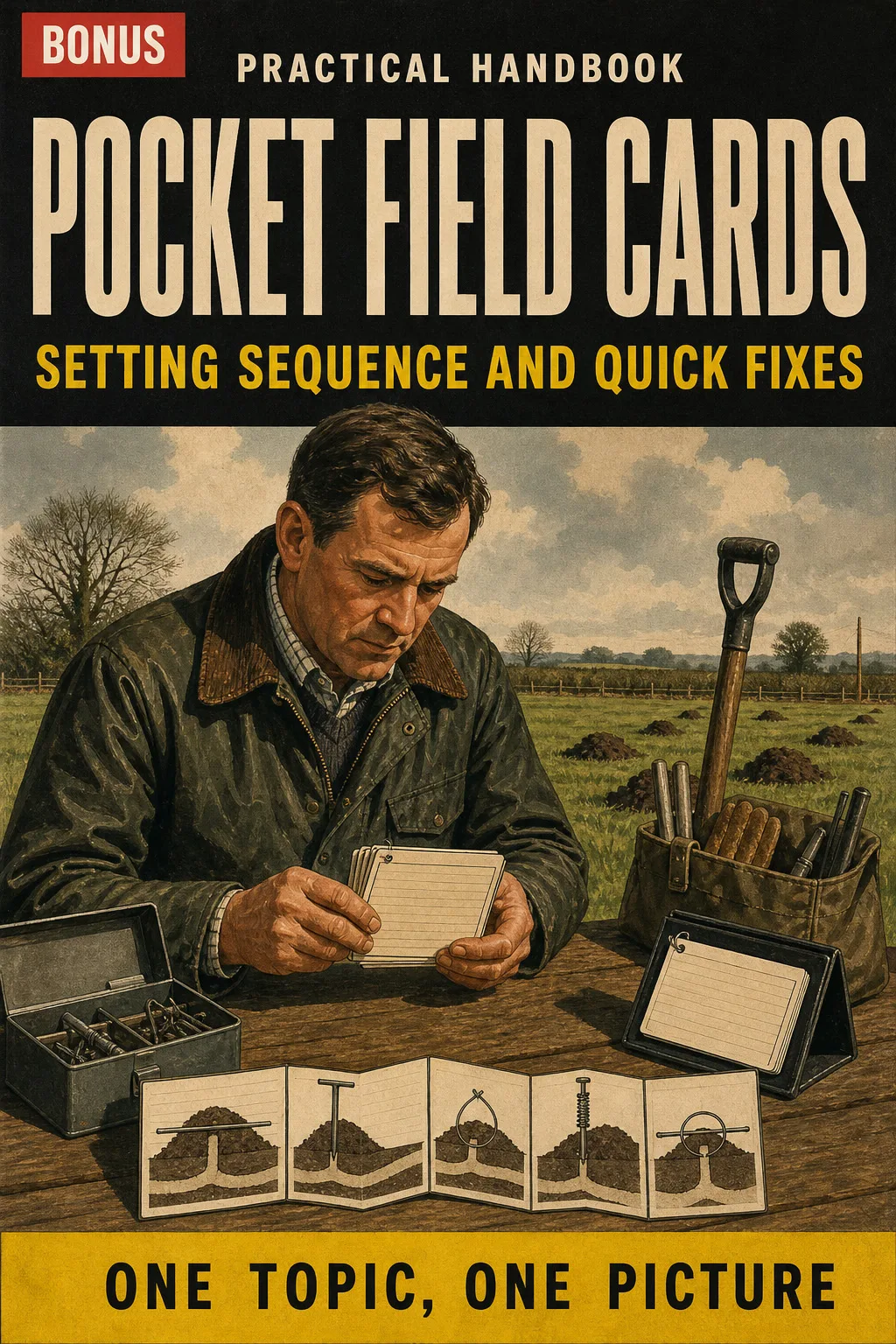
Pocket Field Cards: Setting Sequence and Quick Fixes

BONUS 2: «Pocket Field Cards: Setting Sequence and Quick Fixes»

Value on its own: US$ 14.90

Print-and-keep cards with the setting steps and the fix for each failed trap, so you check them in the van, not on your phone.

Mole Catching Illustrated with 2 Free Books

  • Mole Catching Illustrated: 69 illustrated pagesUS$ 63
  • BONUS 1: Field Practice Book: 25 Lawn and Paddock PlansUS$ 17.90
  • BONUS 2: Pocket Field Cards: Setting Sequence and Quick FixesUS$ 14.90
  • High-resolution PDF to printIncluded
Total value US$ 95.80
YOUR PRICE:
US$ 27
You save US$ 68.80
YES, I WANT MOLE CATCHING ILLUSTRATED FOR US$ 27

📄 This is a digital PDF book sent to your email: nothing is printed or shipped.

Secure purchaseEncrypted payment30-day guarantee

PDF by email: We email you Mole Catching Illustrated as a PDF, together with the two free books. It's a single payment: no installments, no extra charges.

Who This Book Is For

You're learning the trade

You're learning the trade

You've set a few traps from videos and want the whole method in order. The book takes you from reading the hills to setting the trap, one drawing per step.

You're starting a mole round

You're starting a mole round

Your first customers judge you on the first visit. You probe, set, mark and record every job the same way, and leave the lawn looking right.

You already look after turf or land

You already look after turf or land

Greens, pitches or paddocks: you have the ground-type pages and the fault-finding chart to hand, printed in the van or the shed.

Everything You Get Today

US$ 95.80US$ 27
YES, I WANT MOLE CATCHING ILLUSTRATED FOR US$ 27

📄 This is a digital PDF book sent to your email: nothing is printed or shipped.

30DAYS
GUARANTEE

30-Day Guarantee

Try Mole Catching Illustrated for 30 days, bonus books included.

We refund everything if the file won't open, if the book isn't what you see here, if you were charged twice or if the email doesn't arrive. Just email us.

You pay once. No subscriptions.

Frequently Asked Questions

Is it for me if I've already set a few traps and still have doubts?

Yes. It goes from reading the ground to the setting sequence and the fault-finding chart, so it works whether you've set none or dozens. A video shows one lawn and one trap; here every step has its own drawn page, always in the same order, to check on site or print for the van. If your traps come up sprung and empty, there's a whole part on that.

Where does the content come from?

From UK trapping law and guidance: the Pests Act 1954, the Small Ground Vermin Traps Order 1958, the Spring Traps Approval Orders, the Animal Welfare Act 2006, the Wild Mammals (Protection) Act 1996 and Natural England guidance on moles. It's written for British ground and British traps, not an American book. Some rules differ in Scotland and Northern Ireland, so legal points are flagged to check against the current version where you work.

Is it official material?

No. It's an independent illustrated book, not issued or endorsed by any government body, association or trap maker.

Does it replace hands-on training?

No. It's study and reference material. Time on real ground with an experienced molecatcher still matters; the book shows you what you're doing and why.

Does it work in Scotland, Wales and Northern Ireland?

The method is the same on any UK ground. The law pages name the Acts and Orders they rely on and flag that Scotland and Northern Ireland have their own rules, so check the current version where you work.

When and how does it arrive?

As a PDF by email, to the address you enter at checkout. The 2 bonus books arrive the same way.

Do I have to pay every month?

No. It's a one-off payment, with no subscription.

Can I have it on paper?

Yes. It's a PDF you can print at home or at a print shop and keep in the van. The Pocket Field Cards are made to be printed.

How does the refund work?

You have 30 days. We refund everything if the file won't open, if the book isn't what you see on this page, if you were charged twice or if the email doesn't arrive: just email us.

Before You Close This Page

No more probing a lawn and hoping you've hit the run.

Fresh hill, main run, trap spot: you see them drawn, and that's it.

You turn up to the job knowing where everything is.

Drawings make studying faster.

The book is right below.

One-time payment: US$ 27 · Guarantee: 30 days · PDF by email

YES, I WANT MOLE CATCHING ILLUSTRATED FOR US$ 27

📄 This is a digital PDF book sent to your email: nothing is printed or shipped.